Therapeutic Plasmapheresis — what you should know in 2026
A clear guide to therapeutic plasma exchange: the conditions it genuinely treats, how a session works, what it costs, and why the wellness and detox claims do not hold up.
Written by our medical board, reviewed quarterlyUpdated 21 January 19708 min read
What plasmapheresis is and who it is for
Therapeutic plasmapheresis, more precisely called therapeutic plasma exchange, is a procedure that separates your blood into cells and plasma, discards the plasma, and returns the cells to you along with a replacement fluid such as donor plasma or an albumin solution. The point is to remove harmful substances that circulate in plasma, chiefly antibodies and immune complexes that the body is producing against itself.
It is a hospital treatment for specific diseases, not a general procedure. The conditions where it is an established, guideline-supported therapy include Guillain-Barre syndrome, myasthenia gravis in crisis or before thymus surgery, chronic inflammatory demyelinating polyneuropathy, thrombotic thrombocytopenic purpura, anti-GBM (Goodpasture) disease, severe relapses of multiple sclerosis or neuromyelitis optica that have not responded to steroids, and antibody-mediated rejection after transplantation.
Outside that kind of indication, plasma exchange is not a treatment looking for a use. Whether it helps you depends entirely on whether your disease is driven by something in the plasma that can be removed. That is a decision for a specialist who has your diagnosis in front of them.
How a session works
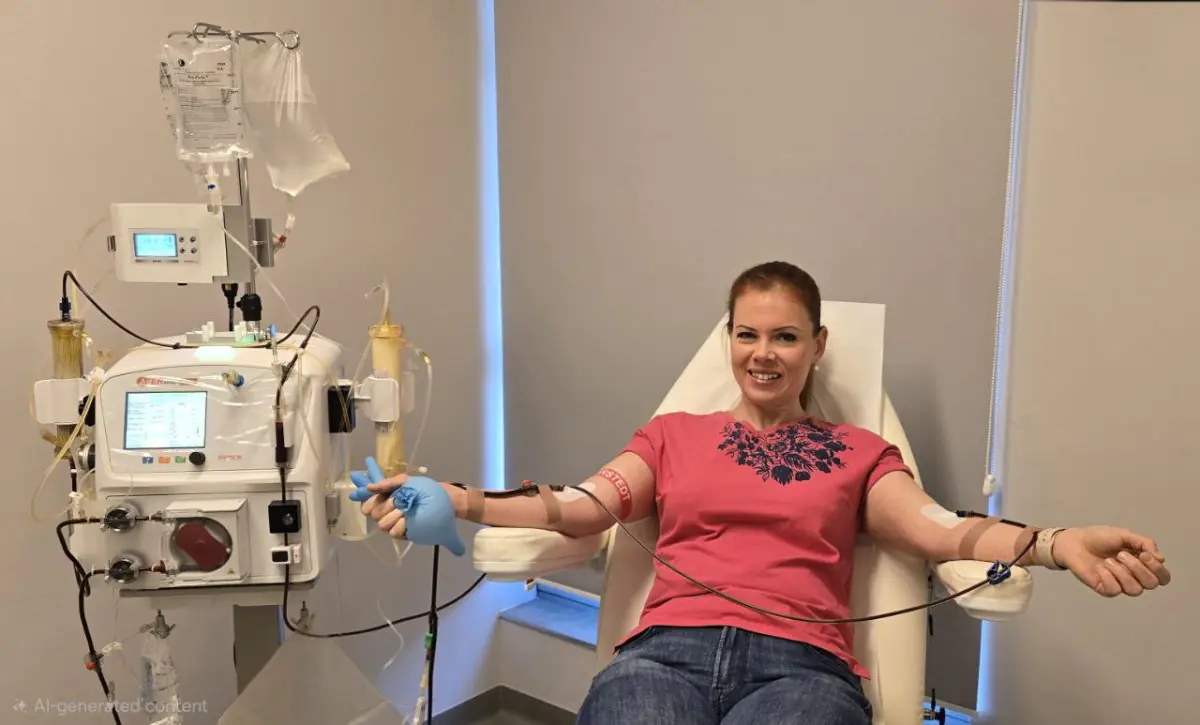
Blood is drawn from a vein, passed through a machine that separates plasma from cells by centrifuge or filter, and returned. If your veins are suitable, two peripheral cannulas may be enough; more often, and always if a course of treatments is planned, a central venous catheter is placed in the neck or groin, which is a small procedure in itself.
A session typically takes two to four hours and processes roughly one to one and a half times your plasma volume. You lie down, stay awake, and can read or watch something. An anticoagulant, usually citrate, is added to stop the blood clotting in the circuit, and this is what causes the tingling around the mouth and fingers that many patients notice.
Plasma exchange is almost never a single treatment. A typical course is around five sessions over one to two weeks, given on alternate days, and some conditions require ongoing maintenance. It is also often combined with drugs that suppress antibody production, because removing antibodies without stopping their manufacture gives only temporary benefit.
What the evidence supports and what it does not
Where plasma exchange is indicated, the rationale is concrete and the evidence is real: in Guillain-Barre syndrome and myasthenic crisis it speeds recovery, and in thrombotic thrombocytopenic purpura it is life-saving and urgent. International apheresis guidelines grade indications by the strength of evidence, and a good clinician will tell you exactly where your condition sits on that scale, including when the evidence is weak.
What plasma exchange is not is a detox. Marketing that offers plasmapheresis to healthy people to cleanse the blood, remove toxins, slow ageing, boost immunity, treat long-term fatigue or improve general wellbeing is not supported by evidence. The body's own liver and kidneys already clear metabolic waste, and there is no established benefit to removing plasma from someone who does not have a plasma-mediated disease. You would be accepting the real risks of a line, an extracorporeal circuit and volume shifts in exchange for no demonstrated gain.
Be similarly cautious about claims for conditions where research is genuinely ongoing but unproven. It is honest to say that a trial exists; it is not honest to sell an unproven indication as an established treatment. If a clinic offers you plasma exchange for something outside recognised indications, ask which guideline supports it and get a second opinion before agreeing.
What it costs and what is included
Plasma exchange is priced per session, and the total depends on how many sessions your protocol requires, so any quote for a single session is close to meaningless on its own. Ask for the cost of the full planned course.
The replacement fluid is often the largest variable. Albumin solution and donor plasma differ substantially in price and in risk profile, and the choice is clinical rather than commercial: donor plasma is used when clotting factors need replacing, and carries a higher rate of allergic reactions. A quote should state the number of sessions, the replacement fluid, the line placement, the daily bloods and monitoring, and the specialist review.
Because the disease behind the treatment is usually serious, factor in the wider episode of care: diagnosis, immunosuppressive drugs, inpatient nursing and rehabilitation may all matter more to your outcome than the exchange itself. Judge a programme on whether it treats the disease properly, not on the price of one session.
Risks and safety
In a properly equipped unit plasma exchange is a well-tolerated procedure, but it is not trivial. The common effects are low blood pressure and light-headedness from fluid shifts, tingling and muscle cramps from the citrate anticoagulant lowering your calcium, and fatigue afterwards. These are managed during the session with fluids and calcium.
The more significant risks come from the central line and from the exchange itself: infection or bleeding at the catheter site, clots, allergic or anaphylactic reactions to donor plasma, and removal of clotting factors and immunoglobulins, which can cause bleeding tendency and lower resistance to infection for a period. People with heart disease tolerate the volume shifts less well.
For these reasons plasma exchange belongs in a hospital with apheresis-trained nursing, immediate access to resuscitation, and a specialist who owns the case, not in a standalone wellness clinic. Ask where the procedure is performed, who supervises it, and what happens if you react during a session.
Getting properly assessed
Because plasma exchange only works when the target is in the plasma, everything rests on the diagnosis. Before agreeing to treatment abroad, make sure the diagnosis is secure: the relevant antibody tests, nerve conduction studies, imaging or blood-film findings for your condition, reviewed by the specialty that owns it, usually neurology, nephrology or haematology.
If you are travelling, continuity is the weak point. A course runs over one to two weeks and many conditions need ongoing immunosuppression and monitoring afterwards. Agree before you fly who manages the follow-up, which drugs you go home on, and how your records reach your own specialist.
If you have been told plasma exchange will help a condition your own doctors have not linked to it, treat that as a reason for a second opinion rather than a reason to travel. A genuine indication will be recognised by any competent specialist, and a good clinic will be comfortable with you checking.
Frequently asked
Is plasmapheresis a detox treatment?
No. There is no evidence that removing plasma benefits a healthy person, and the liver and kidneys already clear metabolic waste. Plasma exchange is a treatment for specific antibody- and protein-mediated diseases. Detox, anti-ageing and general wellness claims are not supported.
Which conditions is plasmapheresis actually used for?
Established indications include Guillain-Barre syndrome, myasthenia gravis crisis, CIDP, thrombotic thrombocytopenic purpura, anti-GBM disease, severe steroid-refractory relapses of MS or neuromyelitis optica, and antibody-mediated transplant rejection. Your specialist should say exactly where your condition sits in the apheresis guidelines.
How many sessions will I need?
Rarely just one. A typical course is around five sessions over one to two weeks, often on alternate days, and some conditions need ongoing maintenance. Ask for the cost and duration of the whole planned course, not a single session.
Does plasma exchange hurt?
The procedure itself is not painful. You will feel the needle or line placement, and many people get tingling around the mouth and fingers or mild cramps from the citrate anticoagulant, which the team corrects with calcium during the session. Fatigue afterwards is common.
What are the main risks?
Low blood pressure, low calcium, and fatigue are common and manageable. The more serious risks relate to the central venous catheter, allergic reactions to donor plasma, and temporary depletion of clotting factors and antibodies. It should only be done where resuscitation and specialist supervision are immediately available.
Is it a cure?
Usually not on its own. Plasma exchange removes circulating antibodies but does not stop the body making them, which is why it is normally combined with immunosuppressive treatment. It is one part of managing the underlying disease.