LDL (Lipoprotein) Apheresis — what you should know in 2026
A clear guide to LDL apheresis: who genuinely needs it, how a session removes cholesterol from the blood, what it costs, and why it is a lifelong commitment rather than a one-off fix.
Written by our medical board, reviewed quarterlyUpdated 21 January 19708 min read
What LDL apheresis is and who it is for
LDL apheresis is a procedure that filters low-density lipoprotein cholesterol, and in some systems lipoprotein(a), directly out of the blood. Blood is passed through a machine and a column that binds LDL particles, and the cleaned blood is returned. A single session can lower LDL cholesterol dramatically, typically by well over half, immediately.
It is not a treatment for ordinary high cholesterol. It is reserved for people whose cholesterol cannot be controlled by any other means: most commonly homozygous familial hypercholesterolaemia, in which cholesterol is extremely high from childhood, and severe heterozygous familial hypercholesterolaemia in patients who already have cardiovascular disease and remain far above target on maximum tolerated drug therapy. It is also used in some countries for patients with progressive coronary disease driven by very high lipoprotein(a).
In other words, apheresis is what you turn to when statins, ezetimibe, PCSK9 inhibitors and, where available, newer agents have been used properly and are still not enough. If you have not exhausted medical therapy, that is the conversation to have first, because drugs are cheaper, easier and well proven.
How a session works
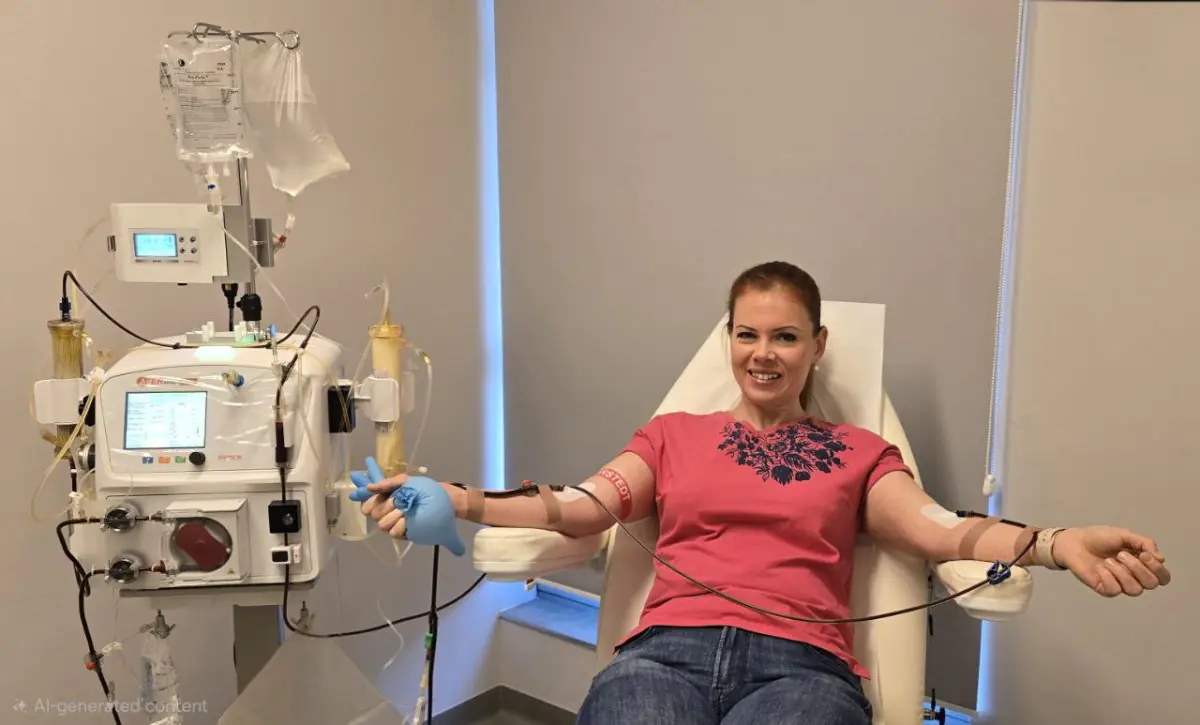
The set-up resembles dialysis. Blood is drawn from one arm, anticoagulated, passed through the apheresis system, and returned through the other arm. Where veins will not tolerate repeated access, an arteriovenous fistula or a permanent catheter may be created, which is a surgical decision in its own right.
A session usually takes two to four hours and processes a large fraction of your blood volume. You are awake throughout and can read or work. Several technical methods exist, including immunoadsorption, dextran sulphate adsorption, heparin-induced precipitation and double filtration; they differ in detail but all remove LDL selectively while returning your cells and most other proteins.
The defining feature of the treatment is repetition. LDL rebounds over the following days as the liver keeps producing it, so sessions are typically repeated every one to two weeks, indefinitely. What matters clinically is not the number on the day of treatment but the average LDL level achieved between sessions.
What the evidence supports
The rationale is well established. Lowering LDL reduces cardiovascular events, and in patients whose LDL cannot be lowered any other way, apheresis achieves reductions that drugs alone cannot. In homozygous familial hypercholesterolaemia, where untreated patients face heart disease in childhood or early adulthood, regular apheresis is a mainstay of care and is recommended in international lipid guidelines.
The evidence base is honestly less complete than for statins. Because the eligible population is small, the supporting data come largely from registries and observational series rather than large randomised trials, and expectations should be set accordingly. The use of apheresis specifically for isolated raised lipoprotein(a) is accepted in some health systems and considered investigational in others.
What apheresis does not do is replace the rest of your treatment. It is added to maximal drug therapy and dietary management, not substituted for them, and it does not cure the underlying genetic condition. Any clinic offering apheresis as a quick way to clean up cholesterol for someone who could simply take a statin is selling you an unnecessary and disproportionate procedure.
What it costs and what is included
Apheresis is priced per session and the number of sessions is the whole story, because this is an indefinite, usually fortnightly commitment. A single-session price tells you almost nothing about what treatment will actually cost you over a year.
A proper quote should cover the disposable column or filter, which is the main consumable and is not reusable across patients, the nursing and machine time, the lipid panel and monitoring bloods, vascular access if a fistula or catheter is required, and the lipidologist or cardiologist review. Ask what happens to the price if your access needs revision.
For most patients this is not a treatment to travel abroad for as a one-off. It is worth travelling for assessment, genetic confirmation and a treatment plan, but the ongoing sessions realistically need to happen close to home. If you are considering care abroad, ask directly how the programme will hand over to a unit in your own country.
Risks and how it feels
The procedure is generally well tolerated and most people continue working around it. The commonest effects are a drop in blood pressure during treatment, light-headedness, fatigue afterwards, and problems at the needle sites such as bruising or difficult access.
Specific risks include allergic reactions to the column or tubing, and a well-recognised interaction with ACE inhibitor blood pressure drugs in certain apheresis systems, which can cause severe reactions and means those medicines are usually stopped or switched beforehand. Tell the team every drug you take. Where vascular access has been created surgically, there are the usual risks of infection, clotting and access failure over time.
The practical burden is real and worth weighing honestly: several hours every one to two weeks, indefinitely, with needles each time. Many patients accept this readily because the alternative is uncontrolled cardiovascular risk, but you should go in with a clear picture of what you are signing up for.
Getting properly assessed
Everything depends on the diagnosis. Familial hypercholesterolaemia is diagnosed on a combination of lipid levels, family and personal history of early heart disease, physical signs such as tendon xanthomas, and, ideally, genetic testing. Cascade testing of relatives matters enormously, because the condition is inherited and often undiagnosed in a whole family.
Before apheresis is even considered, your treatment should be optimised: maximum tolerated statin, ezetimibe, and a PCSK9 inhibitor where funded and appropriate, plus assessment of your coronary arteries. A lipid specialist should confirm that you are genuinely refractory and document why.
If you meet the criteria, treatment is usually long term and is best run by a lipid clinic that can also monitor your cardiovascular status. Ask about how they track your average LDL between sessions, how often they review whether apheresis is still needed, and what would change the plan.
Frequently asked
Who actually needs LDL apheresis?
Mainly people with homozygous familial hypercholesterolaemia, and people with severe familial hypercholesterolaemia and established cardiovascular disease whose LDL stays far above target despite maximum drug therapy. Some units also treat progressive coronary disease driven by very high lipoprotein(a). It is not for ordinary high cholesterol.
How often do I need sessions?
Typically every one to two weeks, indefinitely. LDL rebounds between sessions as the liver keeps producing it, so the benefit comes from repeated treatment maintaining a lower average level, not from any single session.
Does it replace my statins?
No. Apheresis is added to maximal drug therapy and dietary management, not substituted for it. Stopping your lipid-lowering medication would push your average cholesterol straight back up between sessions.
How much does one session lower my cholesterol?
A single session lowers LDL sharply, usually by more than half on the day. The level then climbs back over the following days, which is why the average level between treatments is what your team will actually track.
Is the procedure painful?
It is not painful beyond the needle insertions. Most people sit or lie for two to four hours, awake, and can read or work. Low blood pressure and tiredness afterwards are the most common complaints.
Can I have it done abroad?
It is reasonable to travel for diagnosis, genetic confirmation and a treatment plan, but apheresis is a lifelong fortnightly commitment, so ongoing sessions realistically need a unit near home. Ask any overseas programme how it will hand your care over.